
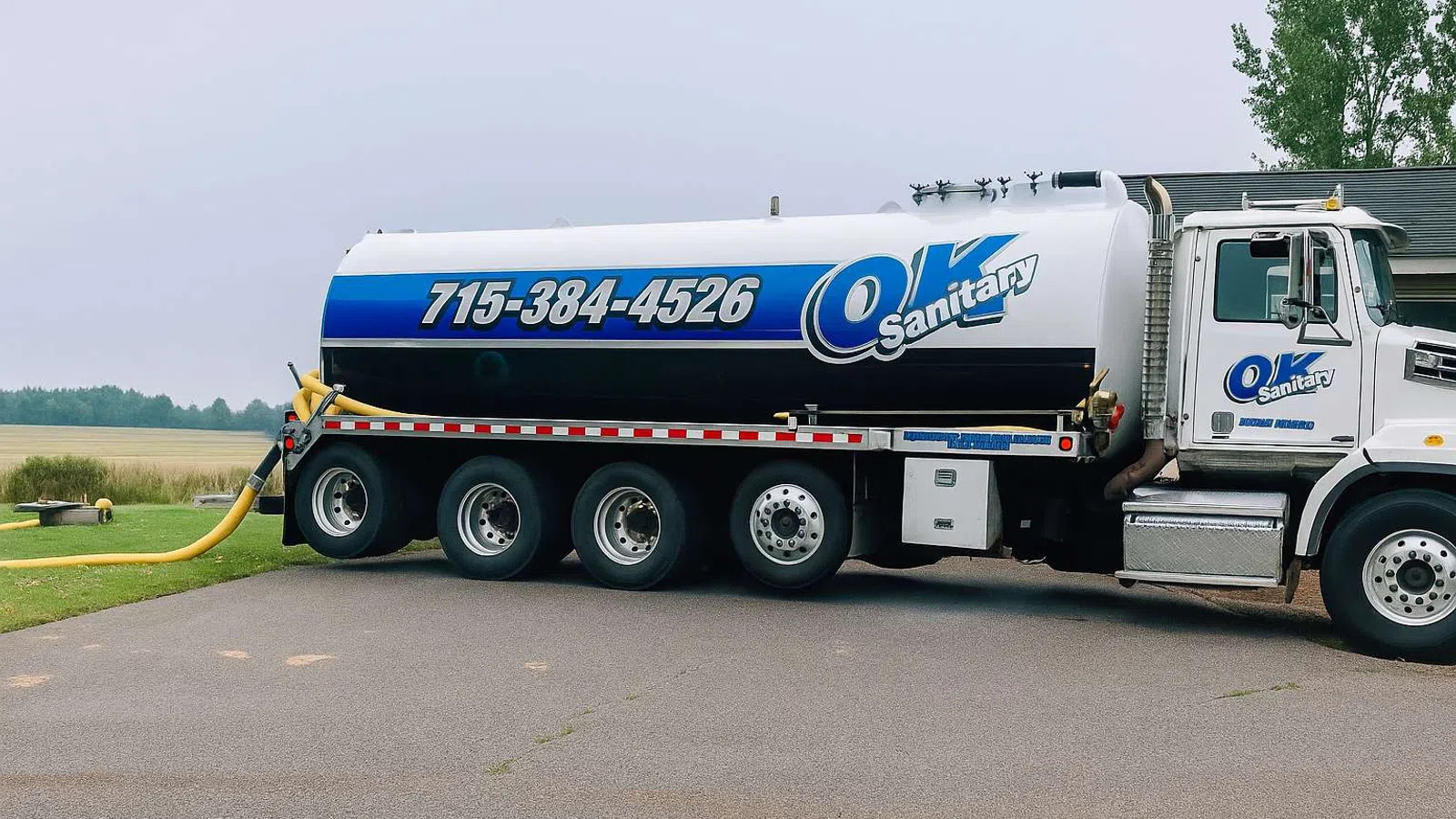
Call OK & We're on the Way
Reliable Septic & Holding Tank Pumping in Marshfield, WI, Since 1986
Septic & Holding Tanks
Holding Tanks
Keep your home safe from messy backups with professional holding tank maintenance.
-
Licensed and insured technicians
-
Same-day service available
-
Alarm monitoring guidance to prevent overflow
-
Service plans tailored to your household water use
Truck capacity up to 5,800 gallons
A family of four can fill a 4,000-gallon tank in under a month. Don't wait for your alarm—call us to stay ahead of the problem.
Septic Tanks
Protect your investment with reliable septic system care.
-
Septic and mound (POWTS) pumping and inspections
-
Filter cleaning and routine maintenance
-
County-compliant inspections every 3 years
-
Emergency response for alarms and backups
With over 40 years of experience, our team is certified by the Wisconsin DNR and Department of Commerce, ensuring your system is maintained to the highest standards. We also have a licensed POWTS Maintainer and Master Septage Operator.
Commercial Services
Dependable solutions for businesses, farms, and municipalities.
-
Grease trap pumping
-
Lift station maintenance
-
Dairy sludge removal
-
Septic & holding tanks
We're fully licensed, insured, and equipped for jobs of any size. When downtime isn't an option, trust OK Sanitary to keep your operation running.
Our Service Area
Arpin
Auburndale
Chili
Edgar
Granton
Greenwood
Loyal
Marshfield
Milladore
Neillsville
Pittsville
Rozellville
Spencer
Stratford
Vesper
Frequently Asked Questions
How often should I pump my holding or septic tank?
Holding Tanks: These should be pumped either when the alarm goes off or before to prevent sewage backing up in to the house, or ponding of sewage on the surface of the ground... Pumping frequency will depend a lot on the size of the tanks as well as the size of the household... per the EPA an average person uses 82 gallons per day so a family of 4 could fill a 4000gal holding tank in 12 days... We find that most households will pump a 4000gal holding tank every 1-3 months.
Septic Systems: Septic systems need to be pumped/inspected no less than every 3 years per the State of Wisconsin... This being said depending on the size of the system (tanks and drainfield) and how many people live in the house as well as water usage, the tanks may need to be pumped more frequently due to build up of solids in the tanks.
What should I avoid putting into my system?
- Grease and Oil: These solidify and clog pipes and the drain field.
- Chemicals: Drain cleaners, bleach, and other harsh cleaners kill the beneficial bacteria in your tank.
- Non-Flushable Wipes: Wet wipes including "flushable wet wipes", paper towels, and other fibrous materials don't break down and cause blockages.
- Feminine Hygiene Products & Other Solids: Tampons, sanitary napkins, diapers, cotton balls, and even dental floss do not decompose and can cause blockages.
- Medications: These can harm the system's bacteria and potentially contaminate groundwater.
- Pesticides, Gasoline, and Paint: These chemicals are toxic to the system and can leach into the soil and groundwater.
- Food Waste & Garbage Disposal Waste: Coffee grounds, food scraps, and other trash overload the system and contribute to solids that need to be pumped out.
- Excessive Water: Using too much water, such as from a long bath, excessive laundry (reamend no more than 2 loads of laundry per day), or plumbing leaks, can saturate the drain field.
Why These Are Harmful
- Kill Beneficial Bacteria: The system relies on living organisms to break down waste.
- Cause Clogs: Grease, oil, and non-biodegradable solids create blockages in pipes and the drain field.
- Overload the System: Excessive water and solids can cause the system to fail.
- Contaminate Groundwater: Hazardous chemicals can leach into the soil, posing a risk to drinking water.
Are garbage disposals safe with septic systems?
How do I extend the life of my system?
Pump your tanks more frequent than the 3 year required pumping: this will reduce that amount of solids in the tank, allowing better separation and cleaner effluent going to the drain field
Use water efficiently
- Reduce water usage: Using too much water can overload the system and push solids into the drainfield. Space out water-heavy activities like laundry throughout the week.
- "Think at the sink!": Avoid pouring anything toxic or non-biodegradable down the drain.
- Dispose of trash in the trash: The rule of thumb is to only flush human waste and toilet paper No wet wipes.
- Limit garbage disposal use: Minimize the amount of grease and solids entering the septic tank.
- Fix leaks: Repair any leaky faucets or running toilets, as even small leaks can add a significant amount of water to your system over time.
- Install high-efficiency fixtures: Upgrade to low-flow toilets, showerheads, and faucet aerators to reduce overall water consumption.
Properly dispose of waste
- Don't flush non-degradable items: Never flush anything except human waste and toilet paper. Items like wipes (even if labeled "flushable"), feminine hygiene products, dental floss, and coffee grounds will clog the system.
- Limit or eliminate garbage disposal use: Using a garbage disposal adds a significant amount of solid waste and grease to your septic tank, requiring more frequent pumping. Consider composting food scraps instead.
- Avoid harmful chemicals: Do not pour harsh household chemicals, such as paint, oil, pesticides, or large amounts of bleach or antibacterial cleaners, down the drain. These can kill the beneficial bacteria that break down waste
Protect your drainfield
- Avoid heavy loads: Never drive or park vehicles, heavy equipment, or livestock over the septic tank or drainfield. This can compact the soil or damage the pipes.
- Proper landscaping: Plant only grass over the drainfield area. Avoid planting trees or shrubs, as their roots can clog and damage the pipes.
- Keep water diverted: Ensure that downspouts, sump pumps, and other drainage systems carry rainwater away from the tanks and drainfield.